
"Fushan Coffee Culture Town"
79 article(s) found

Boutique Coffee Culture Journey Coffee Bean Culture Around the World
Coffee may not be the only motivation and reason for your trip, but it is a meaningful trip to the aftertaste. Guangzhou major travel agencies to promote the hotline, but also really can dig out a lot of unknown coffee culture. This shows that every trip you go out, each route is full of a lot of nutritious common sense, when you run all over the world, a lot of scenery is like

The elegant demeanor of the players from five continents in the third Hainan Fushan Cup
[the third Fushan Cup] the China Fushan Cup International Barista Championship has been successfully held twice since it began in 2012, which has always been professional. High-end. The fair standard organization has attracted the attention and participation of the coffee industry at home and abroad, and the event has attracted Colombia, Brazil, Ecuador, the United States, France, Italy, Vietnam, Japan, South Korea and New Zealand.
All over the world, sometimes I always think of that wisp of coffee.
Coffee may not be the only motivation and reason for you to travel, but it is a meaningful mental journey.

Will coffee be your only motivation to travel?
Coffee may not be the only motivation and reason for you to travel, but it is a meaningful mental journey. The hotlines promoted by major travel agencies in Guangzhou can really dig up a lot of unknown coffee culture. This shows that every trip you travel, each route is full of nutritious common sense, when you run all over the world, a lot of scenery are like

A Survey of Chinese Coffee Culture on the introduction of Coffee in Hainan Island in 1898
1.1 the age of the early introduction of coffee in Hainan Island is indisputably expressed as 1908 in many local records, agricultural history, agricultural history and various books and periodicals in China. However, the remains of the century-old coffee trees in Hainan Island are still there, and the descendants of the ancient trees are still there. Therefore, the actual existence of the century-old coffee trees unequivocally rewrote that the earliest introduction of coffee in Hainan Island should be in 1898. 1.2
Brand weakening capacity shrinking Xinglong Coffee is in trouble
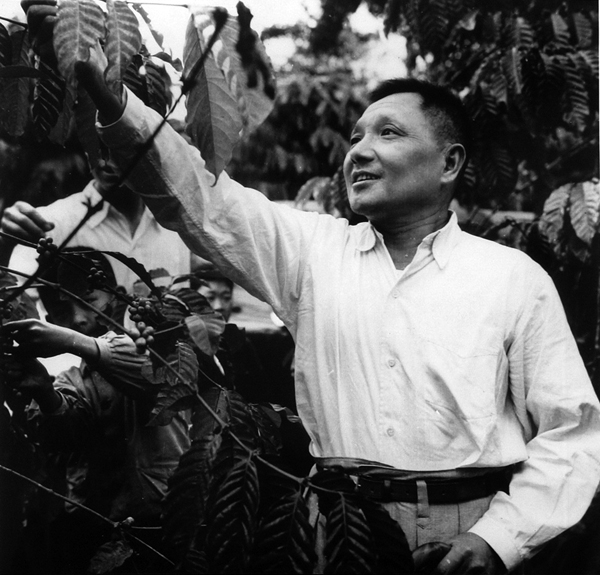
According to Hainan Daily, reporter Sun Hui used to be a brand that could break a hole even if it was thrown on the ground. The Sun River Coffee Factory, the first coffee processing factory in New China, was born here. After being tasted by many party and state leaders, Premier Zhou Enlai left Xinglong Coffee, a world-class sigh. Xinglong Coffee, once a household name, is the darling of supermarkets and specialty stores. However,

When is the first peak period for the development of coffee planting industry in China?
By the end of the 1940s, according to recorded figures, there were 2173.33 hectares of rubber plantations on Hainan Island, with a total of 867600 rubber trees, with an annual output of 199,000 tons of dry rubber, more than 300,000 coffee plants and an annual output of 1 ton of coffee beans. According to a survey in the early 1950s, a large number of coffee was left in Fushan area of Chengmai County, with a total of 70,000 plants, including more than 40,000 plants in Daji Village and Fushan Farm (Hongguang Farm) 1
Coffee for tourists in Xinglong Coffee, Hainan, China
Brief introduction of Hainan Xinglong Coffee: Xinglong Coffee settled in Xinglong, Hainan, in 1953, when Xinglong overseas Chinese Farm was just established, in order to realize the practice of short-term growth, that is, to use short-term crop income such as coffee, citronella and rice to make up for long-term crop income such as rubber, Xinglong began to introduce coffee from Chengmai Mountain. After a long period of research, it has been found that coffee
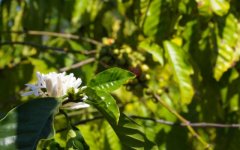
The difference between Hainan coffee beans and Yunnan coffee beans Hainan coffee and Yunnan small coffee beans taste
What are the respective characteristics of coffee beans from these two places? Yunnan small-grain coffee belongs to the Katim species (a variety of Arabica), which is an improved variety of Tibika among the Arabica species, with 25% of the genes of the Robosta species. In the mountainous area with an elevation of 800m to 1800m, the temperature is about 21.5℃ and the annual precipitation is 700~1000mm. It takes 8 to 10 months for the fruit to mature.
Hainan Xinglong Coffee, China
Brief introduction of Hainan Xinglong Coffee: Xinglong Coffee settled in Xinglong, Hainan, in 1953, when Xinglong overseas Chinese Farm was just established, in order to realize the practice of short-term growth, that is, to use short-term crop income such as coffee, citronella and rice to make up for long-term crop income such as rubber, Xinglong began to introduce coffee from Chengmai Mountain. After a long period of research, it has been found that coffee
Hainan coffee beans Xinglong coffee beans
Brief introduction of Hainan Xinglong Coffee: Xinglong Coffee settled in Xinglong, Hainan, in 1953, when Xinglong overseas Chinese Farm was just established, in order to realize the practice of short-term growth, that is, to use short-term crop income such as coffee, citronella and rice to make up for long-term crop income such as rubber, Xinglong began to introduce coffee from Chengmai Mountain. After a long period of research, it has been found that coffee

Introduction to the planting requirements of natural weather for the yield of coffee trees
The yield of coffee trees on the requirements of natural weather is introduced to Xinglong, which is to try the authentic Xinglong coffee. On May 1, Yang Huining, a tourist from Heilongjiang, specially went to Xinglong to taste the coffee praised by Premier Zhou. Dong Yunping, associate researcher of the Chinese Academy of Tropical Agricultural Sciences and director of the Coffee Research Center, told reporters that with the rising tourism fever in Hainan in recent years, our province has

Chinese Coffee Culture | how did coffee enter China? Growth and Development of Coffee in China
Communication of professional baristas Please pay attention to the coffee workshop (official Wechat account cafe_style) Coffee was not introduced into China for a long time until it was first planted in Taiwan in 1884. In the mainland, the earliest coffee cultivation began in Yunnan. At the beginning of the 20th century, French missionaries brought the first batch of coffee saplings to Binchuan County, Yunnan Province, and coffee began to be grown on the mainland. From
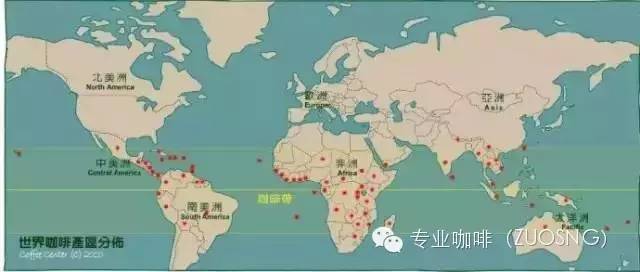
The Historical Progress of Coffee in China: how did Coffee enter China?
The history of coffee introduced into China is not long, and it was not until 1884 that coffee was first planted in Taiwan. In the mainland, the earliest coffee cultivation began in Yunnan. At the beginning of the 20th century, French missionaries brought the first batch of coffee saplings to Binchuan County, Yunnan Province, and coffee began to be grown on the mainland. In terms of natural conditions, many parts of our country, Latin America, South America, India and India

History of introduction and expansion of Coffee in China in the early stage of Coffee Development (5)
1. From the first peak period of the development of China's coffee industry (1952-1961) to the late 1940s, according to recorded figures, there are 2173.33 hectares of rubber plantations in Hainan Island, with a total of 867600 rubber trees, with an annual output of 199,000 tons of dry rubber, and more than 300,000 coffee plants. the annual output of coffee beans is 1 ton. According to a survey in the early 1950s, there was a large amount of coffee left in Fushan area of Chengmai County, with a total of 70,000.

History of introduction and expansion of Coffee in early China (5)
1. From the first peak period of the development of China's coffee industry (1952-1961) to the late 1940s, according to recorded figures, there are 2173.33 hectares of rubber plantations in Hainan Island, with a total of 867600 rubber trees, with an annual output of 199,000 tons of dry rubber, and more than 300,000 coffee plants. the annual output of coffee beans is 1 ton. According to a survey in the early 1950s, there was a large amount of coffee left in Fushan area of Chengmai County, with a total of 70,000.
Coffee planting History of Coffee introduction and expansion in China in the early stage (5)
1. From the first peak period of the development of China's coffee industry (1952-1961) to the late 1940s, according to recorded figures, there are 2173.33 hectares of rubber plantations in Hainan Island, with a total of 867600 rubber trees, with an annual output of 199,000 tons of dry rubber, and more than 300,000 coffee plants. the annual output of coffee beans is 1 ton. According to a survey in the early 1950s, there was a large amount of coffee left in Fushan area of Chengmai County, with a total of 70,000.
The History of Coffee introduction and expansion in China in the early stage (5)
1. From the first peak period of the development of China's coffee industry (1952-1961) to the late 1940s, according to recorded figures, there are 2173.33 hectares of rubber plantations in Hainan Island, with a total of 867600 rubber trees, with an annual output of 199,000 tons of dry rubber, and more than 300,000 coffee plants. the annual output of coffee beans is 1 ton. According to a survey in the early 1950s, there was a large amount of coffee left in Fushan area of Chengmai County, with a total of 70,000.
Development Strategy of Coffee Industry in Yunnan
First, the course of coffee industry in Yunnan (1) A brief history of the introduction of coffee in Yunnan is the product of foreign missionary work. After Burma became a British colony, British missionaries went to the Kachin region of Myanmar to preach, and the missionaries grew coffee for their own use. Then the Jingpo people in this area gradually began to grow coffee. As the Jingpo people live across borders, with the exchange of visiting relatives and friends, intermarriage and exchange, coffee comes in.